
Why Every Multifamily KPI Runs Through Maintenance

Every KPI in Multifamily Runs Through the Maintenance Shop
And most people don’t budget like it does.
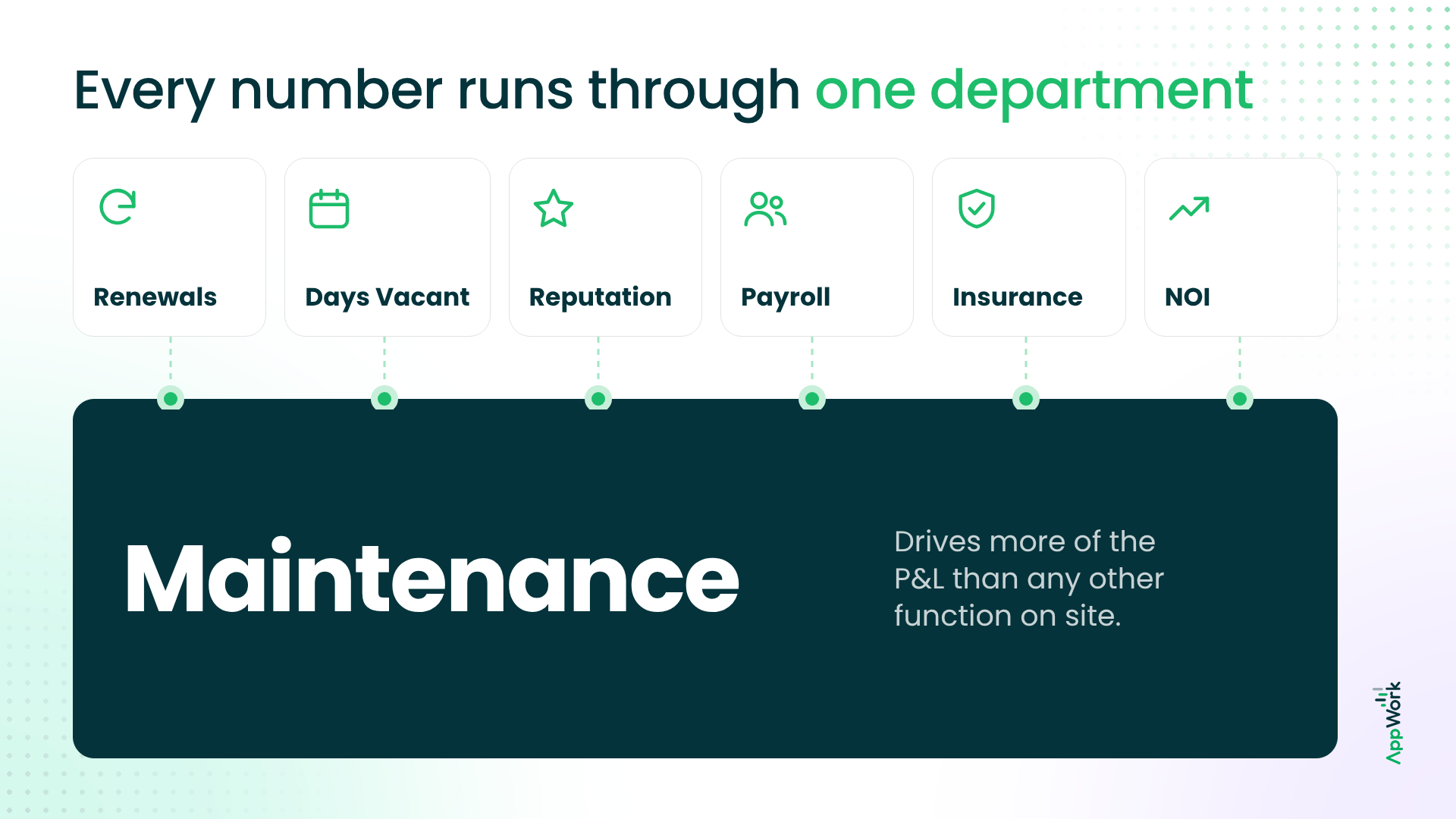
Pull up the KPI deck for any multifamily operator. Renewals, occupancy, days vacant, reputation scores, payroll, insurance, NOI. Now ask which department has the most direct influence on each number. The answer is the same every time, and it is not the department that gets the budget.
I ran operations at a nationwide property management company before I built AppWork, and this was true then. It is still true. Maintenance drives more of the P&L than any other function on site, and it remains the function companies are most hesitant to invest in. I want to walk through the first half of that sentence KPI by KPI, and then take a real swing at explaining the second half.
Renewals
Ask a resident why they didn't renew and you will rarely hear "the rent went up." You will hear about the leak that took two weeks, the AC that was "fixed" twice and still didn't work, or the work order that was closed without anyone showing up. Residents forgive a lot. They don't forgive feeling ignored in their own home.
Ask a resident why they didn't renew and you will rarely hear "the rent went up." You will hear about the leak that took two weeks, the AC that was "fixed" twice and still didn't work
Leasing owns the renewal number on the org chart, but leasing cannot renew a resident who has decided the building doesn't care. That decision gets made in the ninety days before the renewal notice, and it gets made by how work orders were handled. Every renewal conversation is really a referendum on the maintenance team's last six months.
Occupancy and Days Vacant
Days vacant is a Make Ready number. Nothing else. The time between a move out and the next move in is set by how fast the unit gets walked, scoped, turned, and signed off, and every one of those steps belongs to maintenance or to vendors maintenance manages.
Do the math on your own portfolio. Take the units you turned last year, multiply by the gap between your average turn time and the turn time your best property hits, multiply by average daily rent. That number is lost revenue that never shows up on the maintenance line of the budget, because it doesn't show up anywhere. It is rent you simply never collected.
Online Reputation
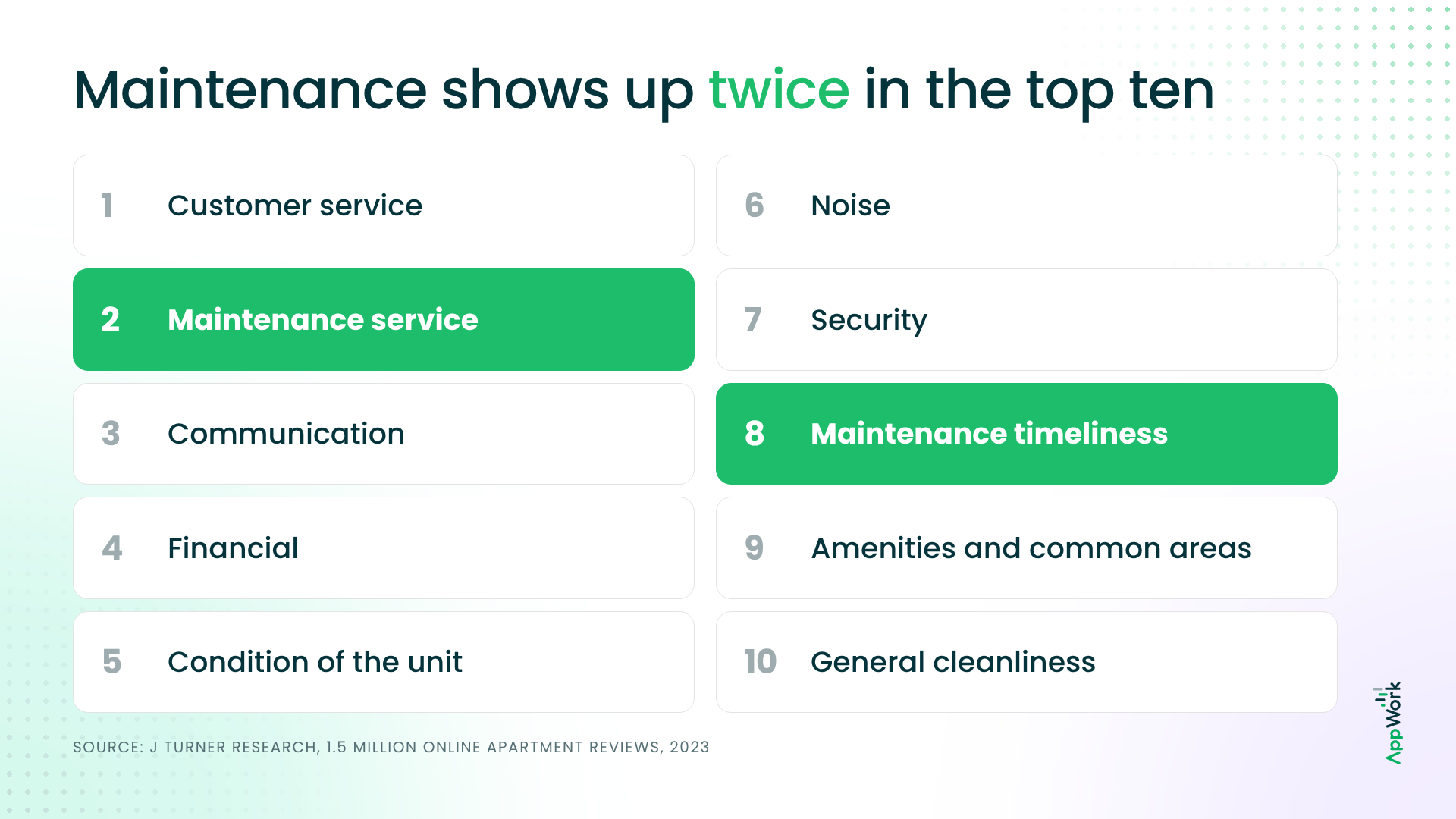
Go read the one star reviews for any community you manage. Then go read the one star reviews for your competitors. They are not about the pool, the clubhouse, or the leasing experience. They are about the AC, the leak, the three visits it took to fix the dishwasher, and the person who never called back.
Reputation scores are a maintenance scorecard written by residents. Marketing spends real money trying to move those scores, and marketing can't touch the thing that actually drives them.
Payroll and Turnover
This one is bigger than most operators realize, because it hits both sides of the office.
When maintenance falls behind, leasing agents become the complaint desk. They take every angry phone call about the AC and the leak, they take the walk-in who wants to know why nobody has come, and they take it with no ability to fix any of it. Agents don't quit because of the leasing job. They quit because of the maintenance job they never signed up for.
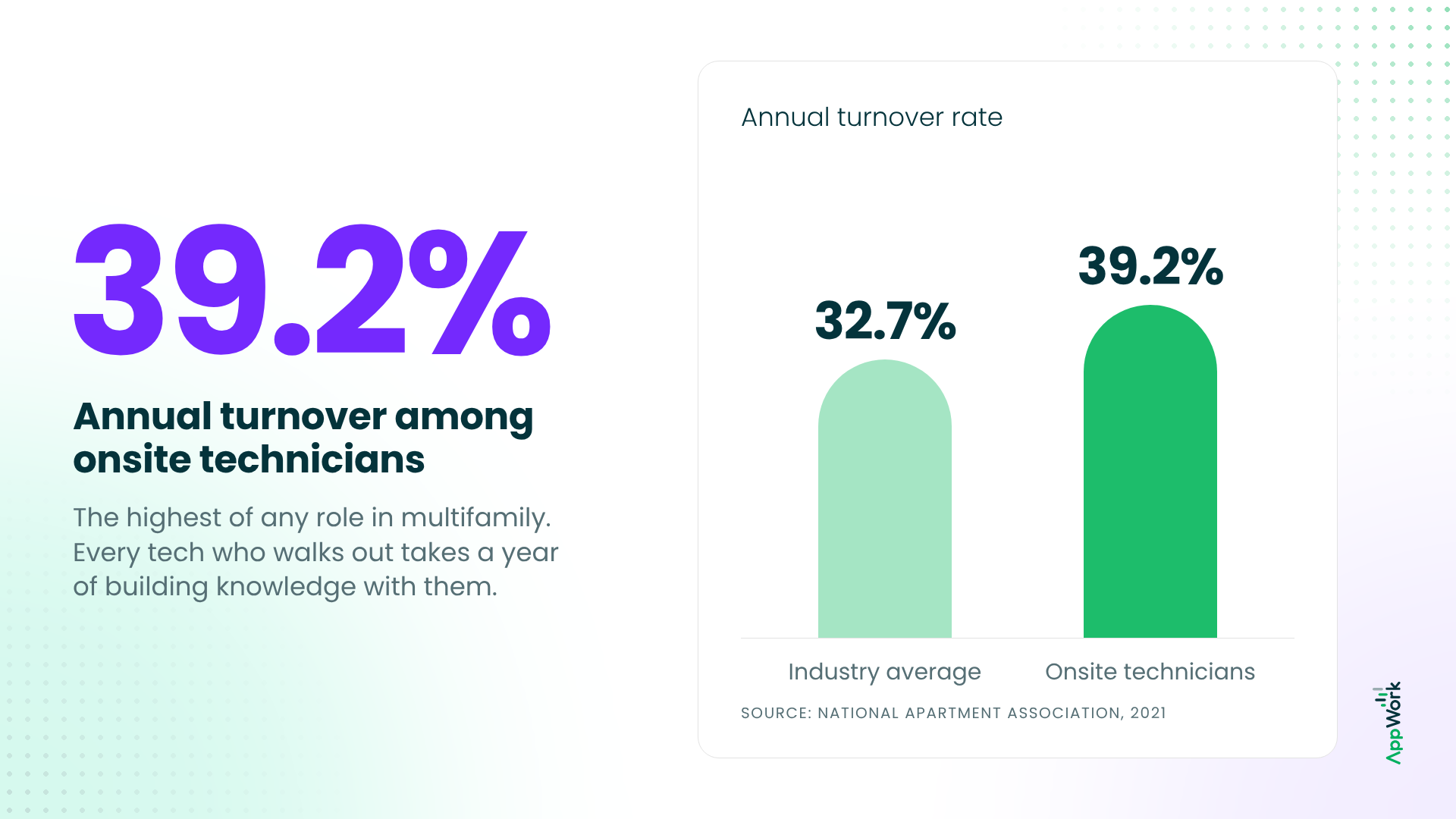
Then the techs quit too, because a shop that is always behind is a miserable place to work. And every tech who walks out takes a year of knowledge about those specific buildings with them. Which boiler acts up in January. Which unit has the bad shutoff valve. Which vendor actually shows up. None of that is written down anywhere. You hire a replacement and start the year over.
So one struggling maintenance shop drives turnover in two departments, and both of those costs get coded somewhere other than maintenance.
Insurance and Liability
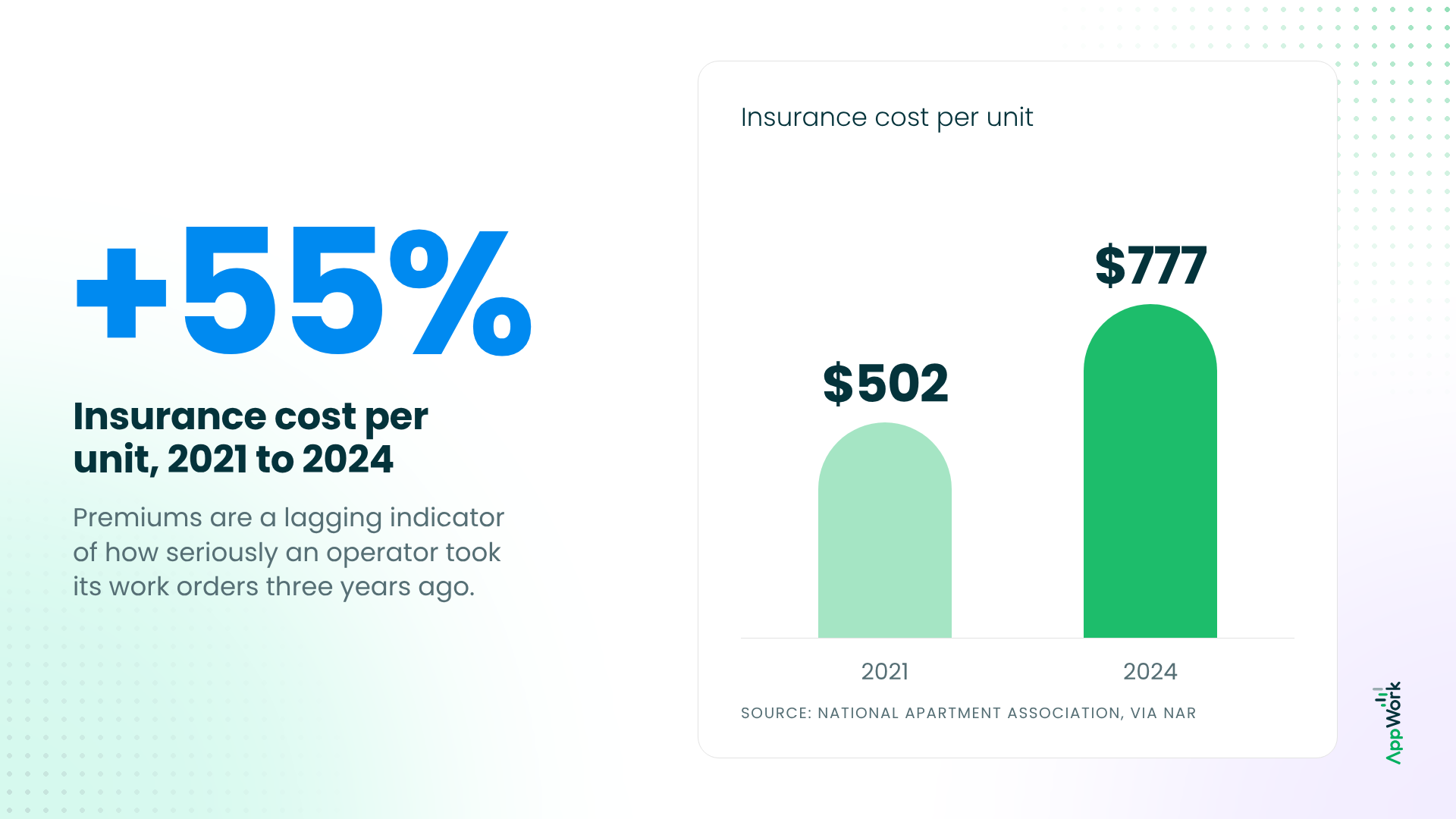
Deferred maintenance is where claims come from. The slow leak becomes the mold claim. The loose railing becomes the injury claim. The water heater that was "fine for another year" becomes the flood that takes out two floors. Insurance premiums are a lagging indicator of how seriously an operator took its work orders three years ago.
The carriers understand this better than most operators do. Ask yours what they look at during underwriting.
NOI
NOI sits on top of all of it. Rent collected, occupancy, turnover cost, repair and maintenance spend, payroll, insurance. There is no path to the NOI number that doesn't run through the maintenance shop. And yet, when the NOI conversation happens at the regional or asset management level, maintenance is usually in the room as a line item to be trimmed, not as the lever it is.
So Why Won't Anyone Invest?
Here is where it stops making sense. Walk into budget season and watch where the money goes. New leasing software, yes. A new CRM, yes. Resident experience apps, marketing spend, a reputation management vendor, yes. Tools, training, and headcount for the people who actually keep the buildings running? Let's revisit next year.
I have thought about this a lot, and I don't think it is because operators are foolish. I think it comes down to a few things.
Maintenance is invisible when it works. Nobody calls the regional manager to say the water heater is fine. Nobody writes a five star review because the AC is still running. The only time maintenance shows up in anyone's inbox is when it fails. So the department gets managed the way we manage anything we only notice when it breaks: as a cost to contain.
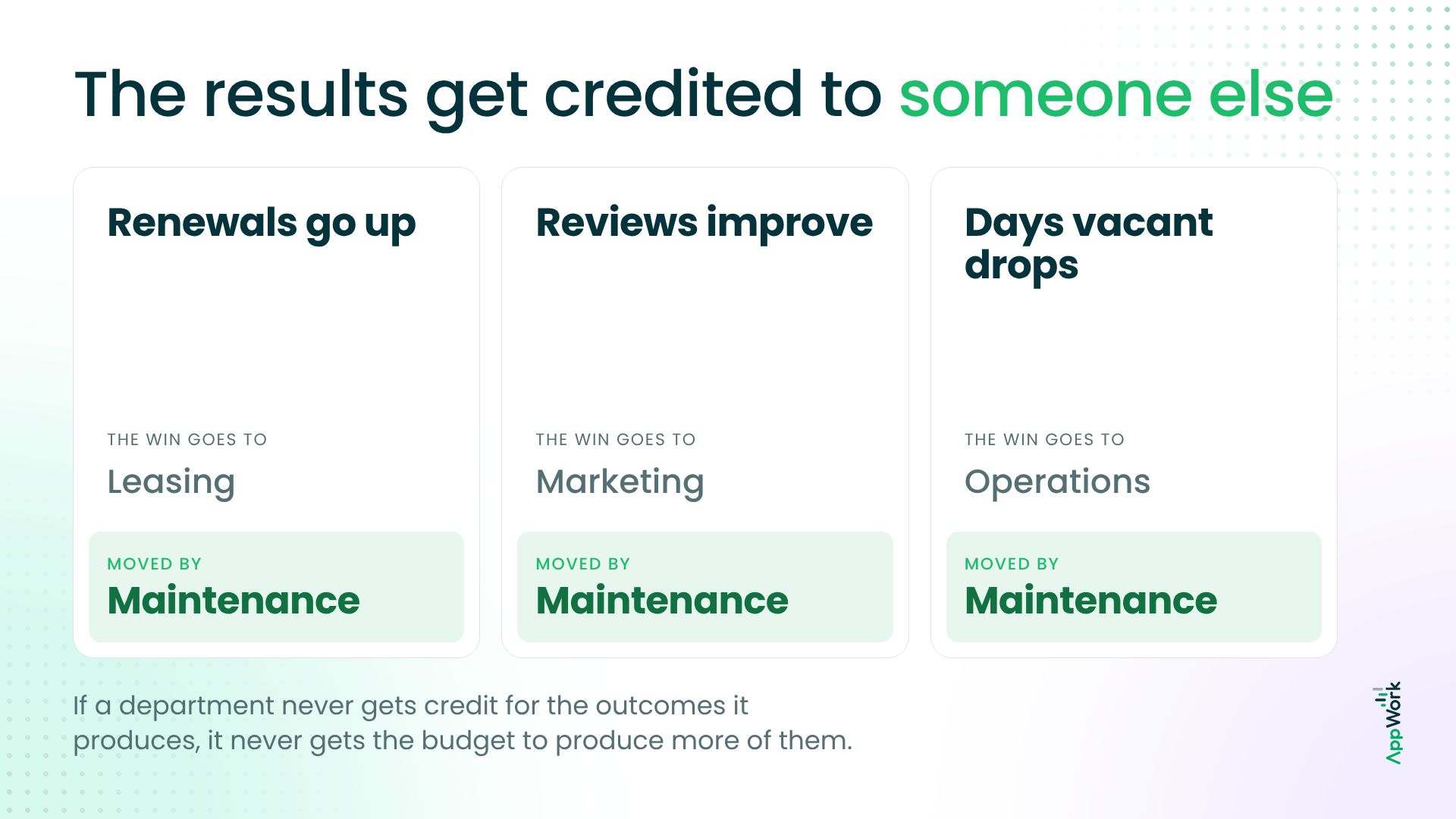
The results get credited to someone else. When renewals go up, leasing gets the win. When reviews improve, marketing gets the win. When days vacant drops, operations gets the win. The maintenance team moved every one of those numbers, and none of them are on the maintenance team's scorecard. If a department never gets credit for the outcomes it produces, it never gets the budget to produce more of them.
The people approving budgets haven't walked a Make Ready in years. Leasing is visible from the corporate office. You can see the pipeline, the tours, the applications. Maintenance happens in the units, in the mechanical rooms, in the shop, places nobody at the executive level visits. It is hard to invest in something you can't see and don't fully understand.
Maintenance has historically been bad at making its own case. This is on the industry, not on the techs. We never gave maintenance leaders the data to walk into a budget meeting and say "here is what our response time did to renewals at these six properties." Leasing has had that kind of reporting for twenty years. Maintenance has had a clipboard and a whiteboard. When one side of the table shows up with dashboards and the other shows up with a gut feeling, the dashboards win.
What It Looks Like When Someone Gets It Right
I am not going to pretend there is a secret here. The operators who get this right do a handful of unglamorous things.
They put maintenance metrics in the same deck as leasing metrics, side by side, every month. Response time, completion time, turn time, callback rate, resident satisfaction on completed work orders. Once those numbers sit next to renewals and occupancy, the correlation stops being a theory and becomes something the whole leadership team can see.
They give maintenance leaders a real seat in the budget conversation, with real data, instead of handing them a number and asking them to live within it.
They invest in the techs the way they invest in leasing agents. Training, tools, recognition, a career path. The tech who stays five years is worth more to a property than almost anyone else on the payroll, and most operators treat that tech as interchangeable.
And they stop coding maintenance failures to other departments. When a resident leaves over a bad work order, that is a maintenance cost. When an agent quits from complaint fatigue, that is a maintenance cost. When the premium goes up, that is a maintenance cost. Put the costs where they belong and the investment case writes itself.
The Question I Keep Asking
If every number you report to your owners runs through the maintenance shop, why is the maintenance shop the last place you spend?
I don't have a satisfying answer. I have the one above, about visibility and credit and who sits in the budget meeting, and I think it is mostly right. But "mostly right" is not the same as "makes sense." An industry that measures everything has somehow decided not to measure the thing that moves everything.
Someone help me make sense of this.

Sean has dedicated 10 years to the multifamily industry, most recently serving as SVP of Operations. With a real-world understanding of property managers' needs, he guides the development of AppWork. He is responsible for overseeing the day-to-day running of the company.