Support Your Team, Don't Just Manage It
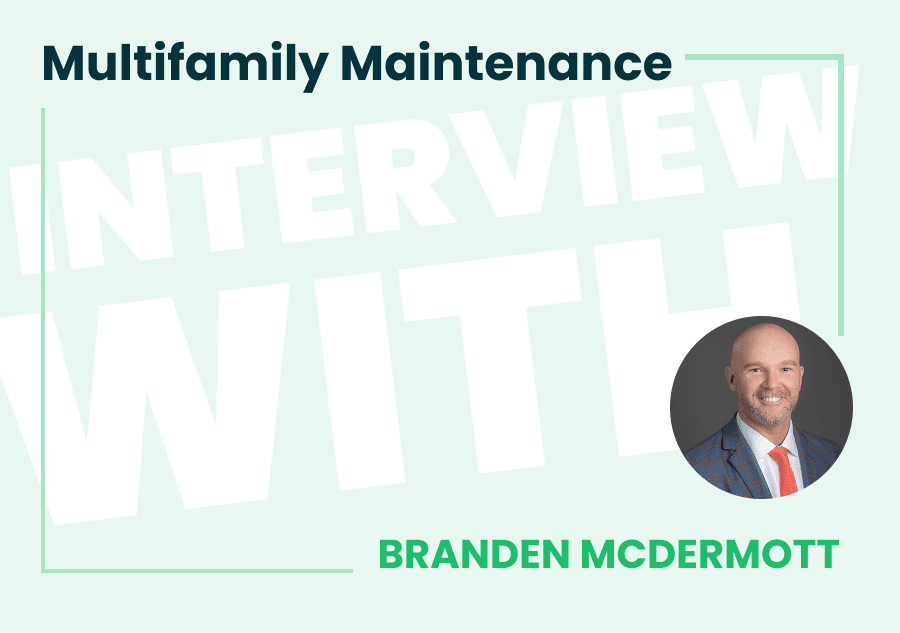
Branden McDermott learned the multifamily maintenance trade in a trench next to his dad, installing water pipes and plumbing fixtures in new apartment construction. That was the start of two decades in this industry, split between multifamily construction and multifamily maintenance. He has built apartments and he has kept them running. Not many people have seen both sides of that wall.
His first onsite job was groundskeeper at a mid-rise. Today he's a Regional Maintenance Supervisor at American Landmark, running maintenance across a large portfolio of properties. Ask him what carried him from one to the other, and he doesn't tell you about a big break.
"I started as a groundskeeper at a mid-rise property and just did my best every day. Opportunities were finding me because of my strong work ethic and staying organized."
He also read the market early. Skilled maintenance people are hard to come by, and that scarcity creates wage growth and opportunity for anyone willing to show up and do the work well. Branden saw that, kept his head down, and built a career on it.
Twenty years later, his whole leadership philosophy comes down to one word. Support. Support your team. Don't just manage them.
"My role today is supporting team members in executing their job descriptions. I always felt managed throughout my career as opposed to being supported. It's refreshing that American Landmark gives me the opportunity to support my colleagues as opposed to managing them."
The distinction sounds small until you have lived both versions. Managing is making sure the work gets done. Supporting is clearing the path so your people can do the job they were hired to do. Most maintenance leaders have felt that difference at some point in their careers. Not many can name it that clearly, and fewer build their whole approach around it.
For Branden, it shapes how he hires and how he keeps people, because to him those are the same thing.
"Treat them as human beings that have good days and bad days. Get to know them and genuinely care about who they are and what they are doing."
Treat them as human beings that have good days and bad days. Get to know them and genuinely care about who they are and what they are doing.
And in peak season, when turns pile up and the work orders don't stop, he doesn't give speeches. He shows up.
"Let them know they are not alone and remind them peak season is only temporary."
The stereotype he refuses to accept
Ask him what people get wrong about maintenance teams, and he names the stereotype he's up against without hesitating.
"We are just a glorified handyman."
That's the perception he's fighting, not what he believes. He kept it short on purpose. Anyone who has run maintenance knows how old that stereotype is, and how much damage it does. It makes it harder to hire good techs and harder to keep them.
He sees the same blind spot in how people judge talent. What separates a good tech from a great one has nothing to do with skill. In his words, it's "just punching the clock" versus "actually caring about the community they work at." The trade can be taught. The caring is what you hire for.
200 work orders and a team that held together
Branden has done the hard version of this job, and one story proves out everything he believes about people.
He and his team once walked into a property with more than 200 open service requests. That kind of backlog can break a crew. Techs burn out, blame spreads, and people quit. What fixed it was not a new system or a bigger budget.
"We treated each other with respect regardless of stress level. We worked hard each day knowing that tomorrow may be just as challenging. The team's consistency and collaboration paid off in a short couple of weeks."
A team that didn't turn on each other, showing up day after day, cleared a backlog that should have buried them. That's the proof behind everything else he says. Treating people well is not the soft option. In his experience, it's the one that works.
What the industry keeps getting wrong
We asked about the most common mistake properties make with maintenance. His answer will sound familiar to anyone in the field.
"Communication breakdown. You need to be on the same page with all team members (office, maintenance, and corporate) in addition to the residents. No such thing as over communication in this industry."
Notice he doesn't blame one group. Office, maintenance, corporate, and residents all have to be in the same conversation. And that last line belongs on a wall at every property in America. No such thing as over communication.
Then we asked the bigger question. If he could fix one thing about the industry, what would it be? He didn't pick a system or a vendor. He picked how this industry has long thought about the people doing the work.
"Looking at maintenance like a department rather than human beings. We get tired and have personal lives too. We are expected to work like robots with infinite energy and health and sacrifice our personal time without consequence to our families."
Burnout in multifamily usually gets treated as a staffing problem or a scheduling problem. Branden says it starts earlier than that. It starts with how the work and the people get seen in the first place. It's also why supporting his team matters so much to him, and why he's quick to credit a company that lets him lead that way.
Burnout in multifamily usually gets treated as a staffing problem or a scheduling problem. Branden says it starts earlier than that. It starts with how the work and the people get seen in the first place.
How he judges a new tool
After two decades in the field, technology has earned its spot in his operation, and he's specific about what changed.
"Dramatically improved efficiency and effectiveness. No more printed service requests and pulling keys."
New tools get a simple test. "Is it bang for our buck? Does the service or tool eventually pay for itself?" His instant dealbreaker is anything that feels like an overpriced gimmick.
On AI's tools for maintenance, he expects his techs to be skeptical at first. Coming from someone who knows his people this well, that isn't a knock on the technology. It's a note on where trust gets earned in this business: in the field, one work order at a time.
Your reputation is all you have
His advice for anyone starting out is the same discipline that carried him from a trench next to his dad to running maintenance for a portfolio.
"Work hard and focus on your own performance. Allow your supervisor or manager to evaluate other team members. Remind them, your reputation is all you have."
The Maintenance Leadership Spotlight series features the people running maintenance operations in multifamily and the lessons they've learned doing it.