Why Paper Refrigerant Logs are a Compliance Risk (and what to do about it)
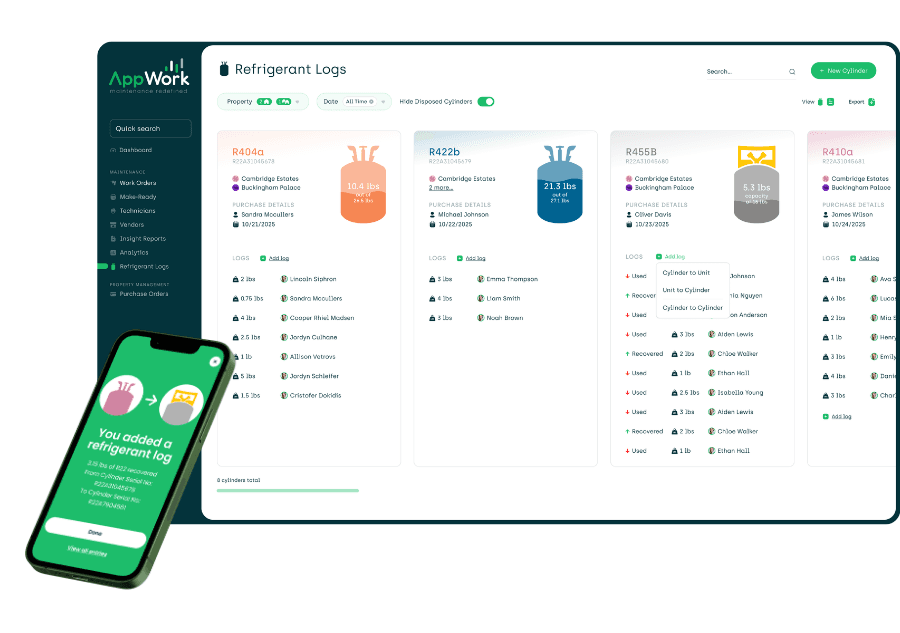

If your maintenance team is still tracking refrigerant on paper forms or spreadsheets, you have a compliance problem. You just may not know it yet.
EPA Section 608 requires that any technician who purchases or uses refrigerant in commercial quantities maintain detailed records of every service event: what refrigerant was used, how much, on which system, by which technician, and when. Those records must be kept for at least three years and made available to EPA inspectors on request.
What an audit actually looks for:
When an EPA inspector reviews refrigerant records, they look for a few specific things: complete entries for every service event, correlation between refrigerant purchased and refrigerant used, and a clear chain connecting work orders to refrigerant logs. Paper logs fail on all three.
Gaps happen. Logs get lost. Technicians forget to fill in a field. A binder goes missing before an inspection. These are the actual failure modes that lead to citations and fines.
The real cost of non-compliance:
EPA Section 608 violations can carry civil penalties of up to $44,539 per day, per violation. Beyond the fine, the operational cost compounds: time spent reconstructing records, legal exposure from documentation gaps, and the disruption of responding to an inquiry that could have been avoided entirely.
The properties that get cited are not the ones with the worst refrigerant practices. They are the ones with the worst record keeping.
What digital logging solves:
Digital refrigerant logging removes the gaps that create compliance risk. When a tech logs refrigerant from their phone during a service call, the entry is timestamped, attributed to the right technician, linked to a work order, and stored in a format that is immediately accessible and audit-ready.
There is no binder to lose. There is no lag between the work being done and the record being created. Every entry is traceable to a specific unit, service event, and person.
AppWork Refrigerant Logs brings this directly into the platform your maintenance team already uses every day. No new software, no new login, no new habit to build from scratch.
Where to start:
The time to build a compliant digital system is before an audit request arrives.
Book a quick setup call with the AppWork team.

With 8+ years of multifamily experience, Diana brings a data-driven and collaborative approach to driving success as AppWork’s Director of Growth. She excels at creating innovative marketing concepts, amplifying brand presence, and maximizing ROI across teams. Diana thrives on connecting people, ideas, and opportunities to deliver meaningful results.