4 out of 5 Residents Rate Work Orders Positively on AppWork
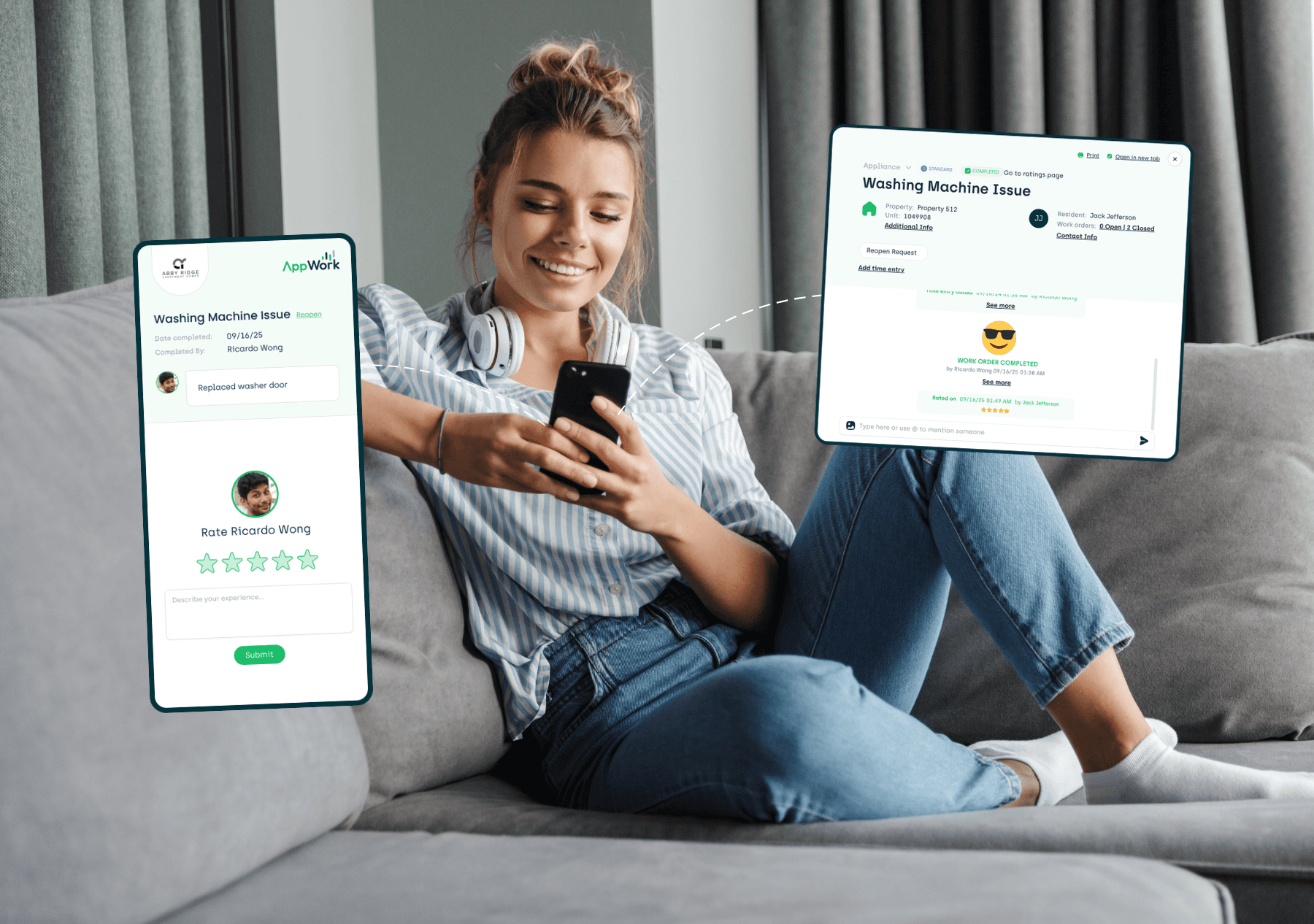

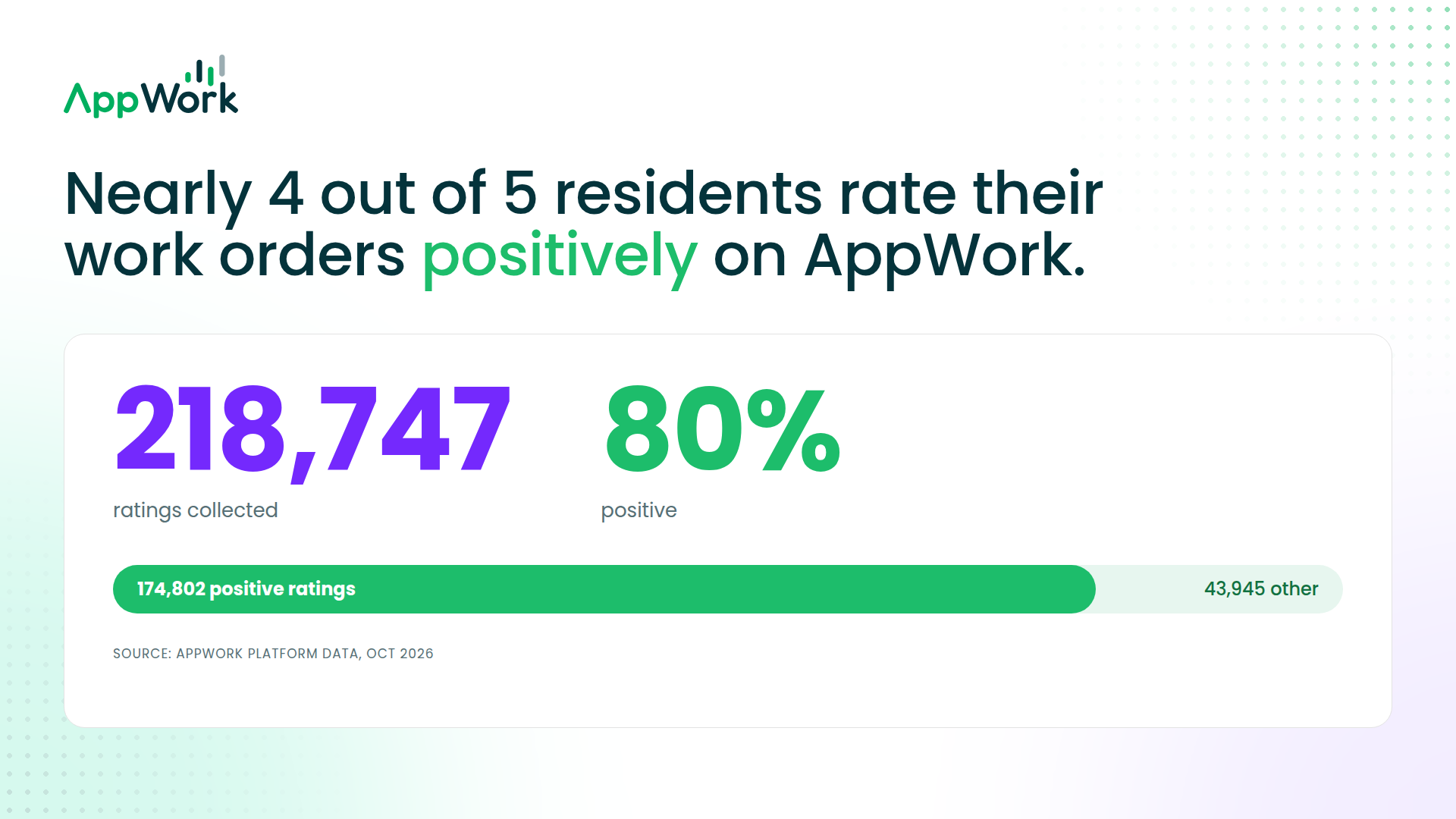
Over the last 12 months, residents rated 218,747 completed work orders on AppWork. 174,802 of those ratings were positive. That is 80%, or nearly 4 out of every 5.
If you run operations for a portfolio, that number should interest you more than any feature list.
Response time tells you how fast your team moved. A resident rating tells you whether the resident thinks the problem is fixed. Those are not the same thing, and the ratings have a larger impact on your renewals.
Where the number comes from
Every work order in AppWork ends the same way. The technician completes it in the app, and the resident gets asked to rate the work on a scale of 1 to 5 stars. We count 4 and 5 stars as positive. Anything from 1 to 3 is not.
The 218,747 figure covers every AppWork client, every property type, and every technician on the platform over the last 12 months. We did not pick the best portfolios or the best quarter. It is the whole thing.
Residents are not a soft audience. Nobody rates a work order on the way out the door because they feel generous. They rate it because the sink drains again, or because it does not. That is what makes the number useful: it is a verdict from the person who called in the problem, not a stat your team reports on itself.
What the other 20% looks like
43,945 ratings came in at 3 stars or below. We read those, and the pattern is not complicated. When a resident rates a work order poorly, it is almost always because the work was not done properly. The technician closed it, but the problem came back, or it was never really solved in the first place.
That is useful information if you can act on it. A low rating in AppWork is not a complaint that disappears into an inbox. It is attached to a specific work order, a specific unit, and a specific technician, and your property manager sees it the moment it lands. You can reopen the work order, send the right person back, and fix the thing before the resident decides the whole property is like this.
Portfolios that get this right are the ones that treat a 2-star rating as a work order that is still open.
Why we track this instead of just speed
Most maintenance software measures what is easy to measure: how many work orders opened, how many closed, how long each took. Those numbers matter, and AppWork reports all of them. But a fast close on a job that did not fix anything is a fast close you will pay for twice.
The rating is the one metric your residents own. It does not care how the work order was routed or how many steps the tech logged. It asks one question: did this get taken care of? When 80% of residents across every client say yes, that tells you something about the teams using the platform, and about what happens when technicians can see their own ratings and are recognized for them.
That is also why we built our Top Maintenance Rating awards around this number. Every season, the 200 properties with the highest share of 4 and 5 star ratings get a trophy. Not the fastest. The ones residents rated highest
"I ran maintenance operations before I started AppWork, and the only number I ever really trusted was what the resident said after the tech left. Everything else can be gamed. If 4 out of 5 residents are telling us the work was done right, that is the metric I want on the wall." Sean Landsberg, Co-founder and CEO, AppWork
What to do with this
If you are evaluating maintenance platforms, ask every vendor one question: what percentage of your residents rated the work positively last year, across all your clients?
If they cannot answer, that tells you how much they know about what happens after the work order closes.
Our answer is 80%, and we will show you the data behind it. Book a demo and we will walk you through how resident ratings work in AppWork, how your property managers see them, and what the Make Ready Board, Scheduling, and AI auto-assignment look like for a portfolio your size.

Sean has dedicated 10 years to the multifamily industry, most recently serving as SVP of Operations. With a real-world understanding of property managers' needs, he guides the development of AppWork. He is responsible for overseeing the day-to-day running of the company.