The Maintenance Angle - Eps 1
Maintenance teams are overworked. Residents expect speed. HVAC is changing. Technology's changing. Resident expectations are changing, but there's always the same old question, are we changing with it?
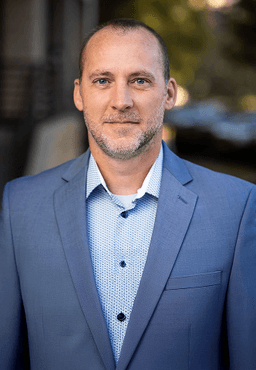
Hey everyone, this is Mark Sharp, and thank you for joining me on my new podcast, the Maintenance Angle, brought to you by the Multifamily Media Network. So you heard the, you heard the open. Maintenance teams are overworked. I know that's not a shock. Residents expect speed. Of course they do.
Everything's an emergency. Technology's changing. HVAC is changing. Expectations are changing. Are we ready? I don't know. I don't know. If you had asked me several weeks ago, I would've said no. As someone who travels the country and speaks in front of a lot of management companies, offers a lot of maintenance training they're not ready.
They're not ready. We aren't changing. We're reacting. We're not changing. But I went to the T AA one conference recently and I met with a couple vendors and had some really good conversations about. Some of the systems and technologies and things that they're putting out there to no longer sell something, but to offer a solution, they're solving a problem.
And it got me to think that while as a, as an industry, as a maintenance organization, they themselves might not be ready. But there's some vendors out there who are providing real solutions now,
I had two conversations at the show that really made me think about where the industry is going. First up is at work. I sat down at their booth and had a nice conversation about their technology and what they're doing to solve the bad technology issue because maintenance guys. Don't avoid technology.
They avoid bad technology. If you make their jobs harder, they're not interested. Listen in, see what Flynn has to say.
So we are at the CAA one conference Yep. Here in Dallas, Fort Worth.
Yep.
Have you ever been to this conference before?
I have. It's I was able to go last year when it was Houston. It was awesome. Yeah. It's amazing.
There's 4,000 people here. It's like the mega Yeah. Mega event of, of the NAA like associations, honestly, right outside of NAA is the biggest one. I'm pretty sure.
Yeah. Yeah. So NNAA actually has a booth here.
Yeah.
And I said, wow, I'm shocked to see y'all here. And he says, we come to all the big ones.
And he's this is like a very, a smaller version of compartmentalized. Yeah. So of course we're gonna be here and that's just that's crazy. But you can see we're at the app work booth. Yeah. Tell me a little bit about app. Work. Like why? And since the trade show floor has been open, the booth has been packed full of people.
Yeah. But why do people want to come to the app work booth? What is it about app work that gets people
I, I think it is honestly, fundamentally how we are different as a operator led organization. Our CEO was the VP of operations for an owner operator out in New Jersey. And I think what we found is most of our customers are coming to us 'cause they under, we understand their language, we understand maintenance.
I think that's something that's, we see intrinsically different from other solutions out there, which a lot of solutions are really good and they're really good solutions overall. But honestly, what we find is that ease of use. Some of the things that make it very simple for the end user, it arms them to actually do their job effectively.
And honestly, most of our customers are coming to us from references is not just coming from us. Reaching out to them, it's mostly them coming to us saying, Hey, I heard, X, Y, and Z customers are using us and they really like what we're doing. So I think that's been honestly something really impactful for us and we're appreciative of how much people are coming to us.
Yeah.
Yeah.
I was doing some research this this morning on maintenance like operation systems and how people feel like they're constantly overworked, but they're getting nowhere.
Exactly.
And like diving into that. And determining that it's not a knowledge issue, it's a data issue.
Yep.
It's what is preventing work orders from getting from the resident to the maintenance professional.
And it was some, something along the lines like 78% of information is getting mistranslated.
Yeah.
How does app work Fix. That part. How can we get information quicker and more precise from a computer, from a resident to the tech?
Yeah.
So they can react faster.
What has to just be incredibly simple, keep the simple soup is a real thing, especially with our software.
And I, I. Say that because a lot of the technicians out there incredibly good with their hands, incredibly good with doing the actual hard work, but the technology has to match the simplicity of what they're doing and actually allow them to actually use it effectively. They're small things, right?
Like logging into the actual software. People forget their username and. Works. They forget maybe your technician is Spanish speaking.
Yeah,
right. They may not necessarily, English is something that maybe they don't have as much proficiency in. These are small things that when you look at a lot of maintenance, technicians see technology as a nuisance.
We want to see it as something that will effectively make their job better. How they do it better, how effectively they manage it. What's the first thing I gotta do? What's the second thing I gotta do? What? How can I. Make it better for me and also make it fun, right? These technicians, they don't get as much TLC as they should.
They typically, I feel like a lot of them are the bottom of the barrel when it looks at the organization. So our technology allows them to make it fun. It gamifies the experience and they're out there doing the work and how they're effectively doing the work. They know what they're doing and they're also getting rewarded.
For that type of work. And I think it's really important 'cause these guys really honestly need something that helps them get there, but it has to be super simple for them to actually use in the process. Or those go right back in a pen and paper, which is the classic method, a lot of technicians have used over the years.
There's been great adoption in terms of technology, but you have to overcome the smaller things to get them to actually start using it and feel like technology is actually something of an advantage versus a disadvantage.
Correct.
Yeah.
Yeah. And speaking of game of. The maintenance top, top maintenance ratings.
Yeah. For the, for first quarter of 2026. Came out this morning.
Yeah.
And I always like to look through those and just give shout outs to the like, way to go. Good job. Congrats. That's awesome. And how do you like gamification? I know some people love that word. Some people hate that word.
Yeah. But to me it, it's not friendly. Competition is great.
Yeah.
And when you're able to compete at a site level, but then something like app work with their gamification, the coin challenge and the competitions and things that are available through the app it puts you on a national scale. Yeah.
These guys are competing against.
Yeah.
Other technicians performing great service. Yeah. To, to their residents. And it's that, that's, it's just so cool. I love that. I love
that. I love it too. And honestly, you're finding that the the older generation of technicians are either retiring or moving on from the profession, and you're finding a lot of millennials and the generation that love playing video games coming in.
Yeah.
Right.
And they love it. It's my job I go home and go on my PS five and go play, video games. An hour or two. Now I'm actually feeling that same sort of like high that I'm getting that from going home and just doing what I love anyways. Yeah. I might as well do it at work and now I can, I'm actually having fun doing it and oh by the way, I could also get prizes.
Some of the companies we work with actually do incentives. Yeah. Whether a bonus or time off. So it's like it's a win-win for these operators. They love it. Yeah. And like it's crazy. These guys will literally come to the leasing office and say, Hey, can I do more work? That's like the best thing you can.
Here as an operator. It's awesome.
Yeah. I'm in third place. I need to get up to set.
I get a second what can I do?
Yeah. No,
it's like a video game. You, it's like playing Mario car, whatever, you know? It's fun. So I love it.
No I think it's, I think it's great. Yeah. And I just I love it. I love everything that, that I.
See that app work is doing. And and I know the techs feel it. I know they appreciate it.
Yeah,
I know it's easier to use. I hear it. I get to travel a lot and I talk to people and, it's always, what do you, what's your work order management system like?
Oh man, it crashes. What do you use? And I won't say names of various companies. And it's always does anybody use app work? And the hands go up. It's what do you think about, what do you think about app work? Man I don't. Have the same complaints as some of these other people do.
So it's really interesting to, to hear as I get to travel and meet new people, new markets. Yeah. And but it brings home too that no matter where you go throughout the country, maintenance is an issue.
It is.
And it doesn't have to be. It
shouldn't. And I think the maintenance profession needs to be elevated just in general.
I think honestly. So one of the missions that we have here at App Work is make the maintenance profession, make 'em on the level playing field as leasing agents as the other departments of the county. Because maintenance doesn't get the love that they should. They are incredibly impactful to every part of the organization when it comes.
To resident retention when it comes to reducing opex and CapEx costs. It's one of the biggest drivers of expenses too. And if you're not to giving the tools to these guys to do what they need to
Yeah,
things like go wrong. You employ residents go down, they move out, your employees leave, it costs almost $15,000.
To each of these technicians to go out the door. If some of these organizations actually did the calculations based on retention, both from a resident perspective and a maintenance perspective, you're looking at big numbers, but it's hard to quantify that 'cause most people are focusing on leasing and other departments where really they should be focusing more on maintenance.
And I'm a little bit biased. Say the least, but I think honestly, this profession needs to be elevated and there's the great people in the industry who are doing that, and they need to continue to do that. I think that's something that's super important. Yeah. Yeah.
There was a statistic I saw this morning that 66% of facilities maintenance considered quitting last year.
Yeah. And it's, apart from the pay is always gonna be an issue, but let's put. Satisfied just getting recognition. These guys wanna be recognized. They're, we always call 'em the silent assassins. These guys are doing the work, they're doing the hard work. They normally don't say anything and they just leave instead of actually doing, instead of, which unfortunately, unfortunately, maintenance technician turnover is the highest position, our highest turnover position in multifamily.
Yeah. How can we reduce that? And it's just small things. You don't even necessarily cost monetary value, like recognizing how they're doing work.
Correct.
How can we upskill 'em? How can we give them more experience? How can we give them more like training, so these are things that aren't necessarily huge cost to the operator, but honestly provide massive dividends for.
Organizations who invest in this sort of stuff, whether it's our technology or some other technology out there, at least they're doing the right steps to get the tech the main technicians to use something.
So you mentioned getting that recognition, and that's one of the great things that I love about what AF work is doing, especially with the coins challenge, especially with some of these just little, game, the gamification, the little competitions throughout companies. Yeah. Is the company doesn't have to do that recognition. Yeah. It's a byproduct of being a customer of app work.
Yep. Exactly.
It's you link in with the soft. Where your guys are enrolled in this, and it just starts going this isn't something you necessarily have to do.
I'm not asking a company to go and create these new systems and do No, we've we've already built it for you. It's already built it in. It's already built in. So if you want to track and find ways to and God, my words here, but if you want to track information and find ways. To recognize your mate.
It's already built into the platform. Yeah, it's already there.
Yeah. It's it's amazing 'cause we've already created the structure and what's funny is I work with these national organizations. They're already building this on the side. They've built, I, there's an operator I a work with I, large national operator.
They created something called Strive for five. And then he saw our software and he was like, this is exactly what I need. Yeah. To basically build out how I can recognize my teams. So you're seeing organizations create some sort of structure of how to recognize their technicians, but it's hard to actually get the data to actually prove how they're recognizing it.
Yeah. '
cause right now, and you know this being in the maintenance industry, it's mostly word of mouth. They're asking the supervisors, Hey, who's the best technician? How are they doing things? And then it, and then it's a game of telephone from there, it gets up to the CO and then the CEO is like giving the recognition to potentially even the wrong person, right?
Like maybe someone who's not doing the right work. So it's now with the data of what we have here at Work, the right people get recognized. They get the recognition. Even it may necessarily be the loudest guy in the room. Yeah. That the the quietest. Guy in the room may be the best and most effective tech.
So it's, I think technology now allows them to actually be able to build something where you're actually recognizing the right people and allowing to advance within an organization.
Yeah.
Which I think is super impactful. Yeah.
Outstanding. I'm not gonna take up any more of your time. Yeah. I appreciate you sitting down.
Yeah. And just talking and shop for a minute. But let's get back to the TAA trade show.
All right. Thanks Mark. Alright. Appreciate it.
Well, we'll cut it from there. Oh, I shouldn't have sat like that. Ow. Oh,
I.
So what did we learn? If technology slows a technician down, it's not gonna work, right? And adoption matters more than features. If you have a thousand features, but none of them work, you're not gonna get your text to adopt the technology. Keep it simple. What a concept.
The second conversation I had was with Chadwell Supply. Brandon Coleman joined me for a couple minutes and we got into something that I wasn't expecting. I. I'd gone to the Chadwell booth and asked around if somebody wanted to come and have a conversation with me, and they were busy. I, ITAA one thousands of people.
Chadwell booth was busy, but they had a button on. He had a button on his lanyard it says, we do HVAC install or ask me about our HVAC installs. And so I asked him. Tell me about your HBAC installs, and then it got us to talking about other things. It got us to talking about education and training and several different programs or, or slogans or promises that Chadwell has to their customers.
Let's listen to that one too. See what Brandon has to say.
Alright, so you've been with Chadwell three years?
Yes.
And national accounts? Yes. National account manager. And where are you based? Are you here in Texas? I'm
based outta Houston.
Outta Houston. Houston Great City. It's a great, no, I love it. I love Houston.
But, so as someone like myself who, who travels and does a ton of EPA and HVAC training, I. Saw your button that says, who does your HVAC install?
And it made me want to just ask and with Chadwell Supply, and that right there says, who does your HVAC install is Chadwell getting into the HVAC. Business.
We are full on and conducting HVAC installs right now throughout most of our markets that we service our customers.
Wow. So what brought the need for that?
I would say for sure the uncertainty. Of the transition of the A two Ls. A lot of management companies would prefer a trusted partner with vetted relationships where, if you already trust us with your products and some of our services, why not talk to us about our h HVAC install services?
Especially, we sell the product to them anywhere.
Yeah. And like you just, you mentioned the A two Ls with the industry and. Certainty. A lot of questions, a lot of people wanna know flammable refrigerants, how flammable, what does that mean?
Yes.
And so having like you said, a trusted, your words, not mine.
Yep. Your a trusted partner, vetted, partner,
vetted, partner,
vetted, install crew, to come out and do the work. That should take a lot of the, a lot of the. Work and maybe some of the liability
a hundred percent,
Off of onsite staff.
Yes. 'cause and that is another segue where, if you need more training on it, we can offer that training.
But if you don't have time or you don't feel comfortable, we can take that load off. And, do it at a efficient, fast cost, cost effective way.
Yeah. So you just mentioned training I, I know of Chadwell University, but what can you tell me about Chadwell University? What types of trainings are out there?
The cool thing about our Chadwell University, we, we have horses over 70. Classes that you can take on demand where it can be for a porter or it can be for a property manager. It can go to that C-suite level customer where, and we can tel a training program specifically for the customer.
So I think that's an awesome tool. I came from the management side. I know there's always is and going to be a need for training.
Always. It's never ending. As new technologies as efficiency standards change as low GWP refrigerants hit the market. It's always something, I taught a session this morning and I asked as by show of hands, who came into the industry knowing everything that they know now. And of course, no one's hands are raised,
of course,
but 'cause you have to have that growth mindset, you have to continue to progress, you have to continue to train because everything, continuously change.
It's
constantly changing.
That's the only constant is change. It's like an oxymoron. And, I love Chadwell University and I love what they're doing for the. Street. I have the unique privilege because App work and Chadwell have a great partnership.
Partnership and, our AppWorks coin challenges and Chadwell is out there with merch to give out to the top so many winners and. Trophies and all of the great things, but I just as someone who gets to travel and do a lot of training out there as a national account manager, do you hear at a, not necessarily your, not at site level, but do you hear from your site?
That onsite maintenance needs training? Is that something that I'm saying that's, is constantly being asked
for? That is a conversation. If it's not asked for, I try to point them in that direction and try to drive that conversation where at least we can have a discovery call. Just to understand, every management company is completely different where training should never be different no matter the customer, client, however you're set up,
right?
So whether you're a, a 500 unit community or property. Company versus 30,000. The training here is the same as here. It doesn't matter.
Does not matter.
And that's one of the great things, Mount Chadwell University is y'all, it doesn't matter.
It doesn't matter about
that.
And that's if you talk to me or if you don't talk to me, we have something for you.
But, I'd like to customize it. And Port Taylor for Europe. Individual organization, but we're here for whoever. 'Cause it's the day you stop learning is the day you stop, growing. So
That's the day it's over.
Yep.
That, that's the day it's over. That's when you have to do that deep check.
Am I still in this the way I thought I would be?
A hundred percent.
So what is it what else is unique about Chadwell? What sets you, what sets Chadwell apart from. Of your competitors whom I won't mention
and I won't mention 'em either. I could, but no, I won't.
But coming from the management side, I've only been a supplier partner for about three years. But so most of my experiences on the management side where I was a customer before I, decided to come to the partnership to come to the supplier. Partner side and coming to this side, I knew who I would want to work for and I hounded Chadwell Supply for about a year before I even got the opportunity to interview.
That
is
fantastic. So
you went to
them?
Yes, I went to them continuously for a while. And then it happened and, I'm very blessed and love being here. I've done renovations with Chadwell. I've done my day-to-day orders where, you know, just our saying that, one order, one delivery, one invoice.
Next day we save. But sometimes it's the same day. Deliveries in a lot of markets where I know from my own experience. That is not the case with a lot of my competitors.
Yeah.
That's one thing we pride ourselves on and if we don't get it right, we're fixing and trying to figure out why we did not get it right.
Yeah. So it won't happen again.
Yeah, you started to say something and I thought you reminded me of Fox. Friend Adam Porter, and his big thing is your order on our truck the next day. The next day. That's what he's, that's his thing. And I love that because it's true.
It's true,
it's
true. It's not a, it's not something you're striving for. That's just what it is.
That's our standard.
That's your standard.
That is our standard.
And not making promises you can't keep, it's no, this is what we're good at. This is the market.
We're in your order, our truck next day. And if you can't do that and you just don't service that market, 'cause. You can't meet the standard. You can't.
And we're transparent about that.
Exactly. Exactly.
So we like to under promise, over deliver. But we hand on, we're amazing at what we do.
And we stay within our lane a hundred percent multifamily, where, a lot of people don't realize some other industries may affect our competitors just because of need and demand.
So what did we learn? Talking to Brandon, we learned that the A two L transition is real and we're not ready. We're not, our industry is not ready. So we have a company out there who's created something to provide a solution so that we can better take care of our residents. Not every property has in-house expertise.
We don't. There are a lot of people who get promoted to positions before they're ready because they just happen to show up for work that day. Burnout is a real thing. Technicians leave all the time. We have a slew of industry professionals, maintenance technicians who are leaving the industry because they're burnt out, because they have no recognition and they're going to go find some recognition somewhere else.
Training can't be optional anymore. It has to be included. You have to provide good quality, relevant training. If you do not, you will be left behind.
Maintenance is no longer reactive. It's about systems, training, communication, speed, recognition, and partnerships.
And this is exactly why I started the Maintenance Angle podcast, to look beyond the work order and to get into the people and the performance in our industry. The future of maintenance is not coming. It's here. Are we ready? And that's been your maintenance angle. We'll catch you on the next one.